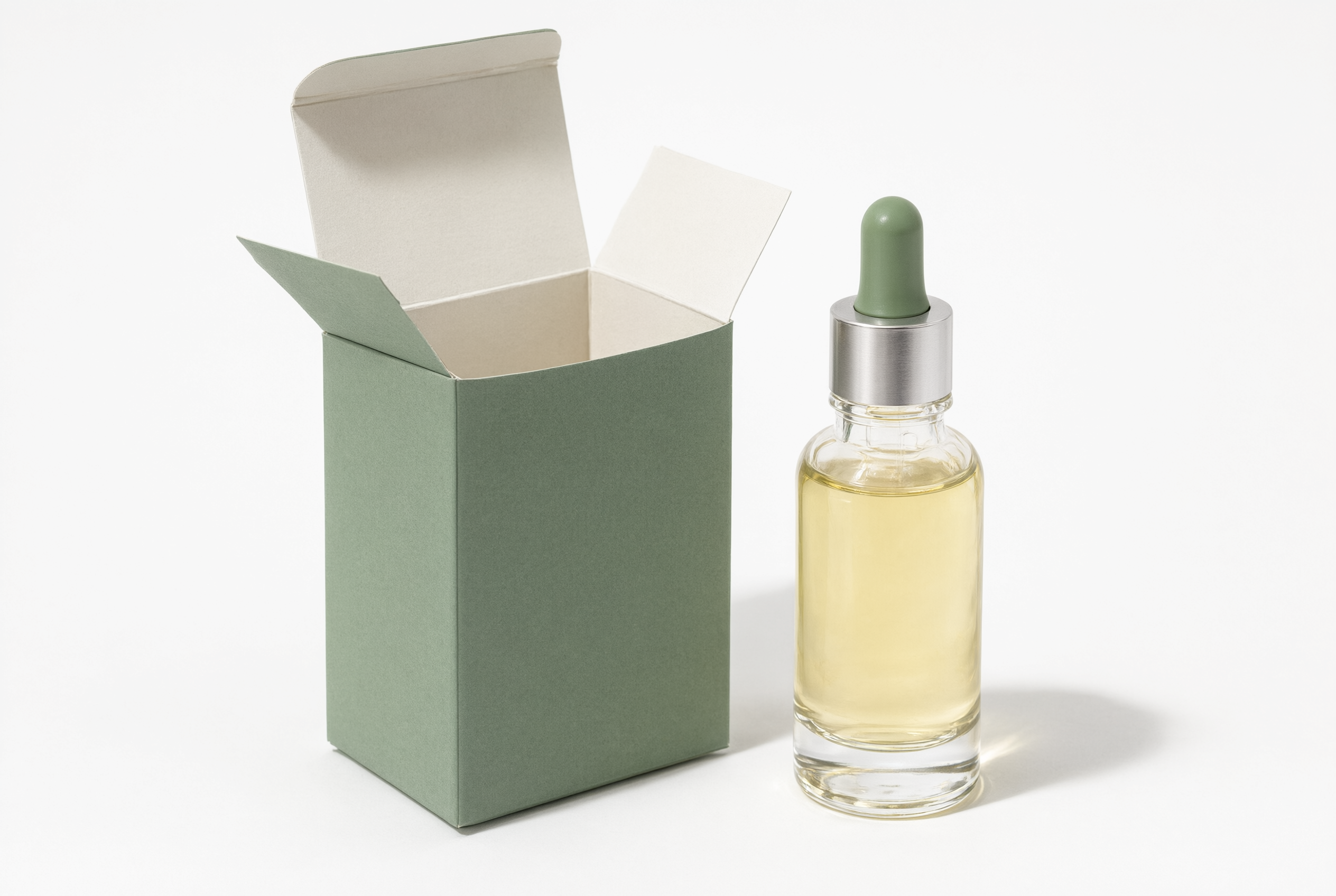
Primary product view
Custom Cosmetic Boxes
Serum Boxes
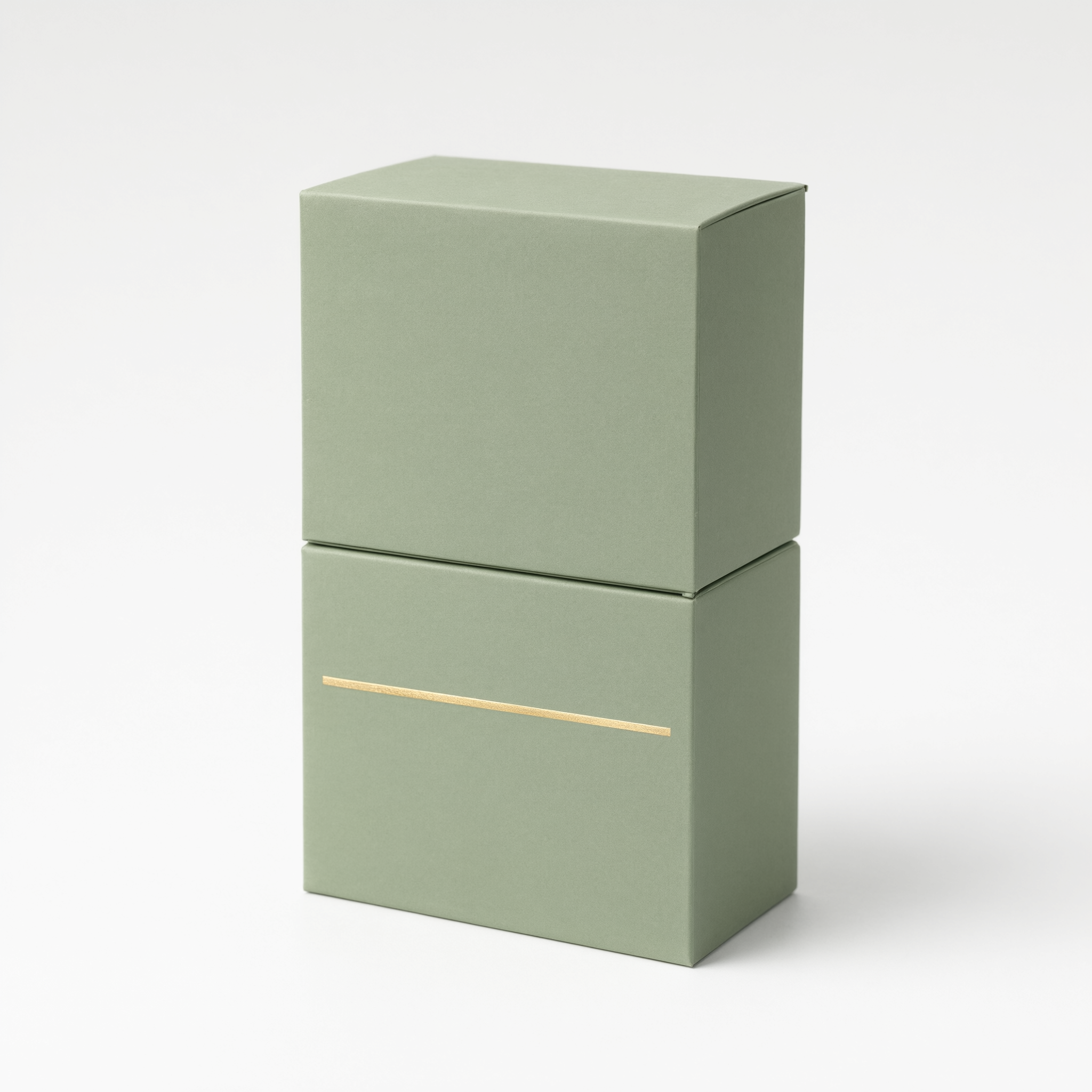
Serum boxes built around your dropper bottle's exact shape, so it arrives on shelf without shifting, cracking a seal, or looking underfilled.
- Construction options
- Rigid two-piece or folding carton
- Typical material
- SBS paperboard, chipboard-wrapped for rigid
Product brief
Built around the way you pack.
A serum box has one job most shoppers never notice until it fails: keeping a glass dropper bottle from moving. Weight, height, and dropper-cap width shift from one brand to the next, so a box tuned for a different bottle either rattles loose or refuses to close. Getting the fit right the first time means fewer damaged units and a tighter unboxing experience for the customer.
Two Ways to Build It
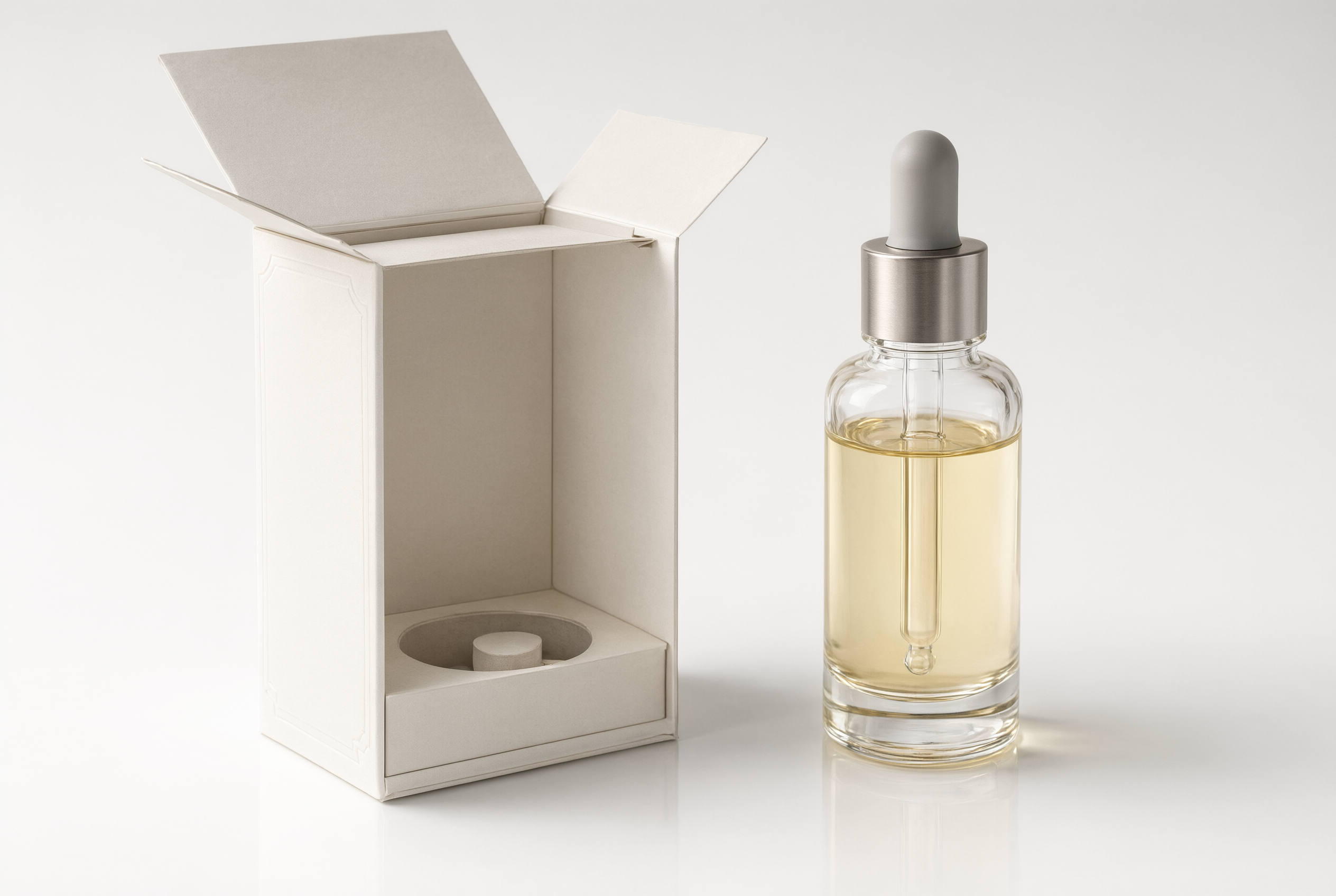
A rigid two-piece base-and-lid box gives a heavier, more premium hand feel — the kind of unboxing moment that supports a higher shelf price. A folding carton in SBS paperboard costs less to produce and ships flatter before assembly, which suits higher-volume lines where per-unit cost matters more than the unboxing weight. Either way, a die-cut riser or tab-locked flap inside the base usually holds the bottle steady without needing foam padding.
Finish Choices That Read as Premium
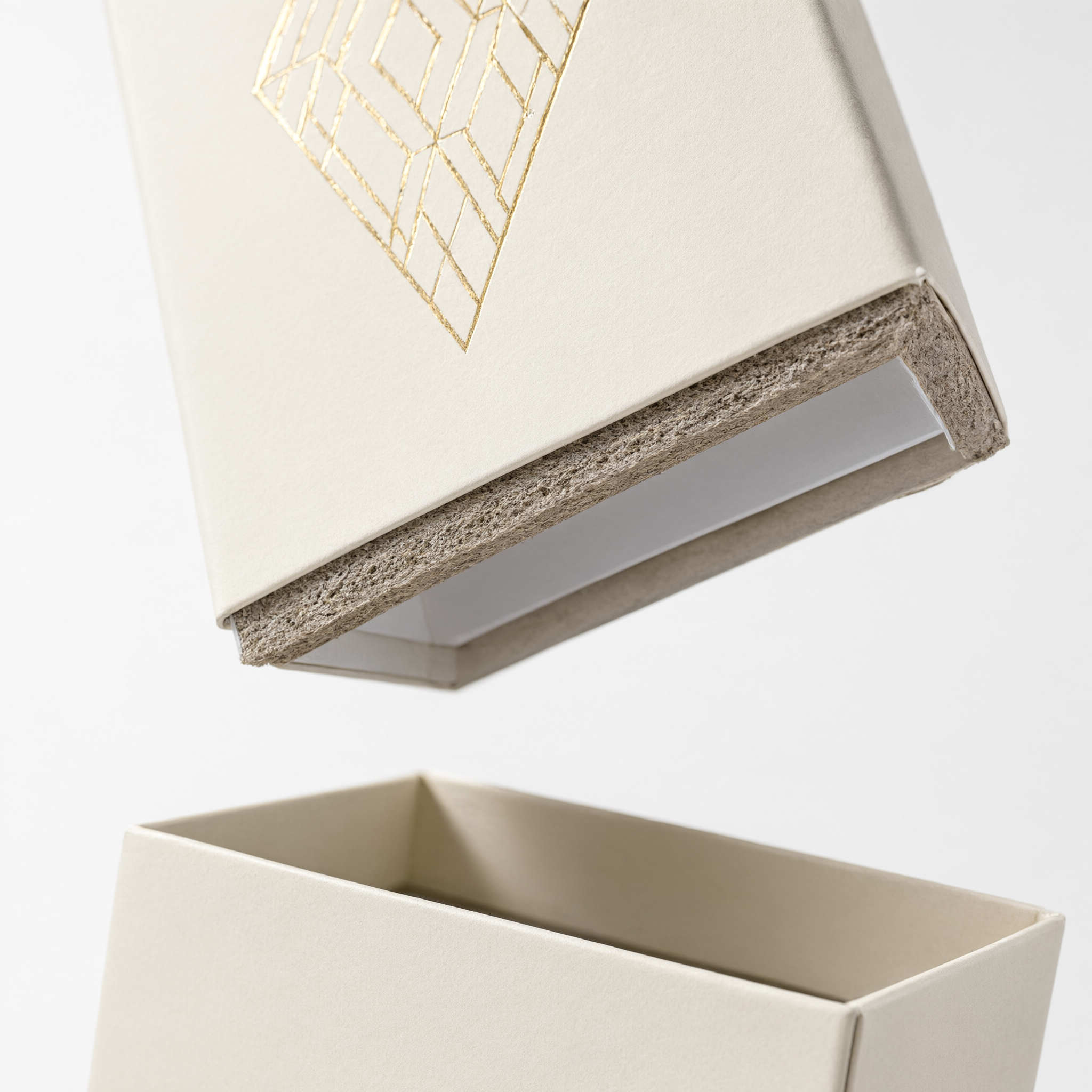
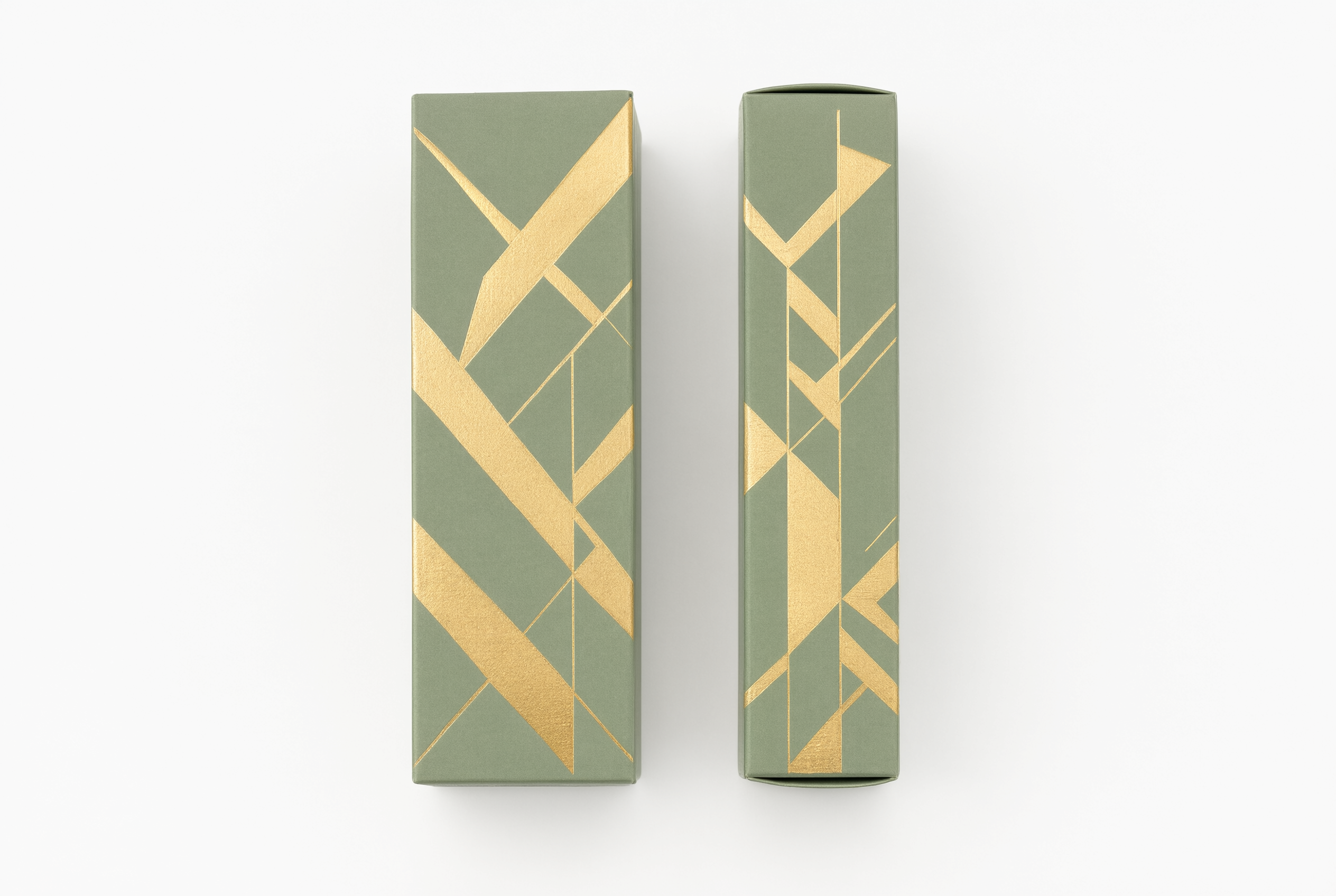
Skincare brands often print less and finish more: a light or kraft base with one accent color, then foil stamping or embossing to carry the premium signal. Foil stamps cleanly at fine line weights for a logo mark; embossing adds a tactile cue that photographs well for an e-commerce listing, though it needs a slightly heavier board to hold the impression.
What Changes the Dieline
Bottle height, base diameter, and dropper cap width set the internal cavity. Whether you want a visible window or a fully enclosed box changes the cut too. Getting these confirmed early means your first proof is close to the final production run instead of needing a second pass.
Proof points
A box that keeps pressed glass from moving
The internal support and outer construction work together so the bottle stays in place from the production line to the customer's counter.
- Shipping
- Free US shipping
- Design support
- Dieline review and digital proof included
- Construction
- Rigid two-piece or SBS paperboard folding carton
Fitted to your bottle, not a catalog size
Send your bottle's height, base diameter, and dropper cap width and the box is cut to hold it without an added foam insert in most cases.
- Material
- SBS paperboard or chipboard-wrapped rigid stock
- Construction
- Rigid two-piece base-and-lid, or folding carton
- Common finish
- Foil stamping, embossing, or matte lamination
- Internal support
- Die-cut riser or tab-lock flap; foam insert only for unusually heavy bottles
Retail shelf skincare
Folding cartons for drugstore or beauty-retailer shelf placement.
Boutique and gift-tier serums
Rigid two-piece construction for a heavier unboxing experience.
Subscription box inclusion
Compact folding cartons sized to fit inside a larger monthly box.
Sample and travel-size serums
A scaled-down version of the same dieline for smaller bottle formats.
Finish-forward printing for skincare
Most serum branding leans on one or two finish techniques rather than dense full-color coverage.
- Foil stamping
- Clean at fine line weights for logos and brand marks
- Embossing/Debossing
- Tactile brand mark, needs a heavier board
- Matte lamination
- Low-glare surface that photographs well for e-commerce
- Gloss lamination
- Higher color depth for bolder graphics
What decides rigid versus folding
A short list of facts about your bottle and volume points you to the right construction.
Bottle geometry
Height, base diameter, and dropper cap width define the internal cavity.
Construction preference
Rigid two-piece for a heavier unboxing feel, folding carton for lower per-unit cost.
Window or enclosed
A visible window changes the dieline and, for rigid boxes, the wrap-paper cutting.
From bottle spec to finished box
Measuring the actual bottle first avoids a second tooling round later.
- 1.0
Send bottle measurements
Height, base diameter, and dropper cap width.
- 2.0
Choose construction
Rigid two-piece or folding carton, based on volume and unboxing goals.
- 3.0
Review the dieline and finish proof
Confirm fit before committing to plates or foil dies.
- 4.0
Approve production run
Sign off on the final proof, then production begins.
Feel the finish before you commit to a run
Compare rigid and folding construction side by side, and see how foil or embossing reads on the actual board.
Shipping charge: $19.99. Credited toward your first order.
Request a Sample KitQuestions before production.
Visible answers and structured data stay identical.
Usually not — a die-cut paperboard riser or tab-locked flap holds most glass dropper bottles steady. Foam is typically reserved for unusually heavy or oddly shaped bottles.
Generally yes, since rigid construction wraps chipboard in printed paper rather than using a single printed sheet, but the price gap narrows at higher volumes.
Yes, though a window changes the dieline and, for rigid boxes, needs a separate window die-cut in the wrap paper — flag this early so it's priced correctly.
Rigid boxes generally take longer since wrapping and assembly add steps a folding carton skips — exact timing depends on your specific build.
Only if the bottles share very close dimensions. Most lines need a separate dieline per bottle size to avoid a loose or overly tight fit.
Other formats on the bench.
Catalogue products and editor-managed formats available for a production conversation.
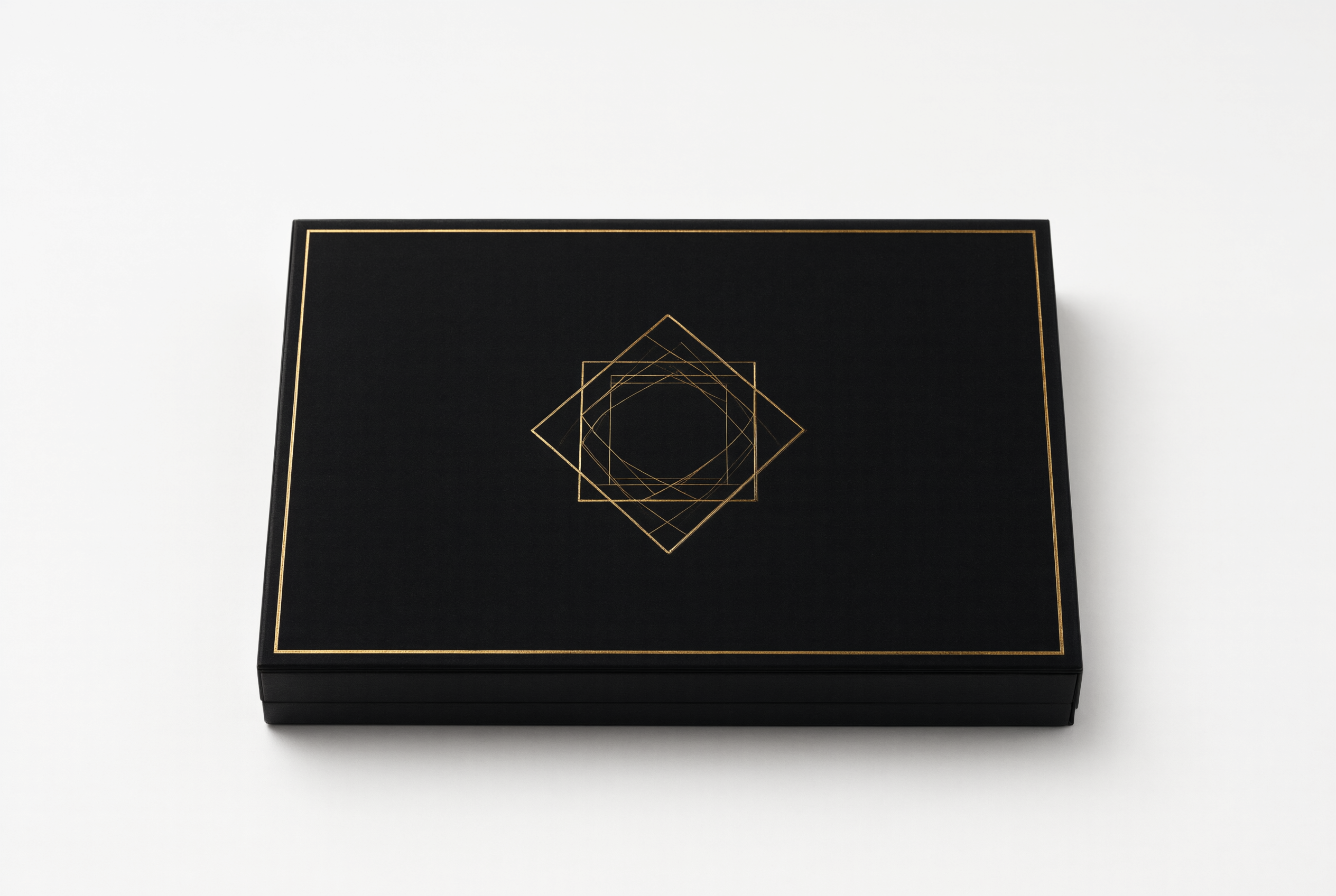
Catalog product
Eyeshadow Boxes
View product →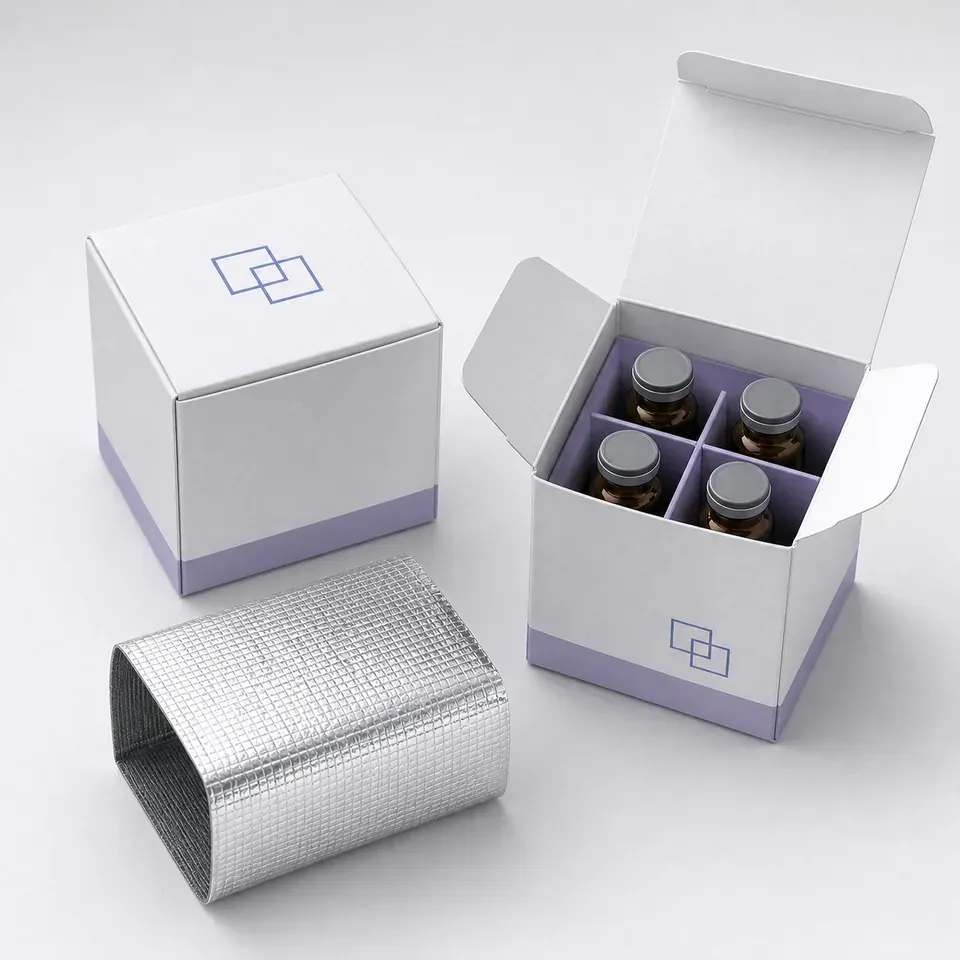
Catalog product
Peptide Vial Boxes
View product →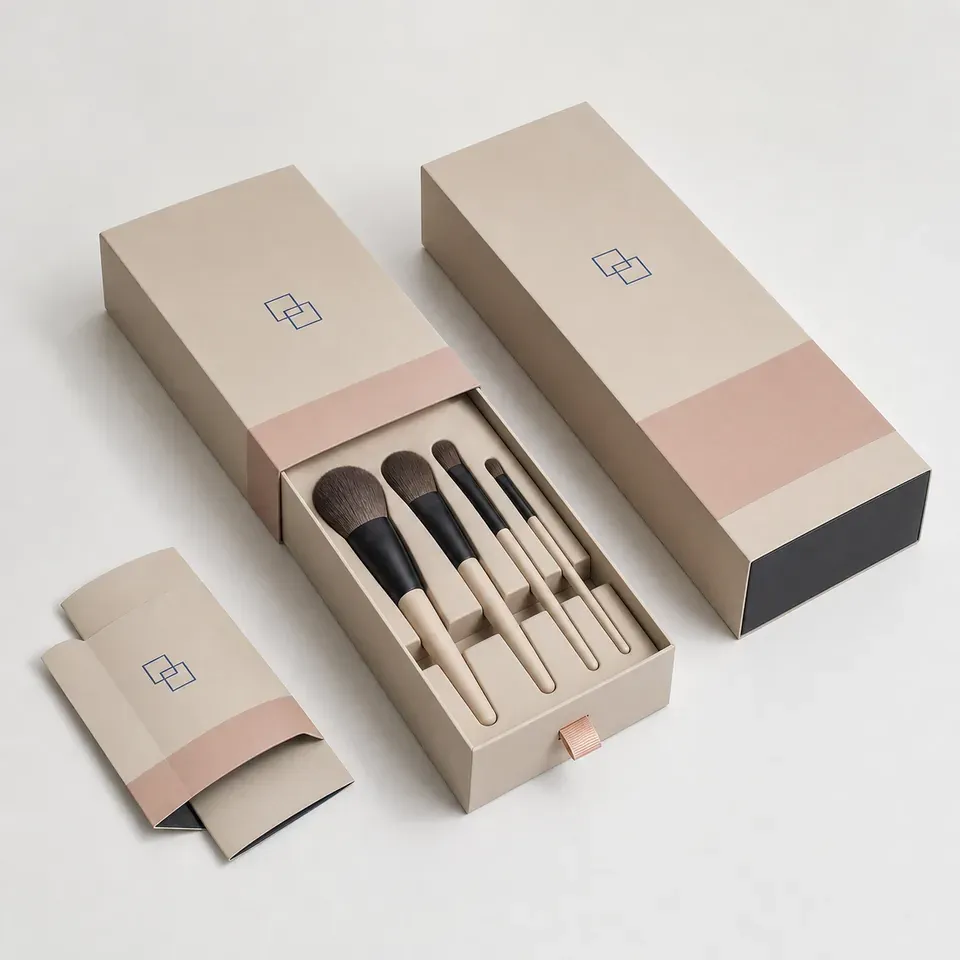
Catalog product
Makeup Brush Boxes
View product →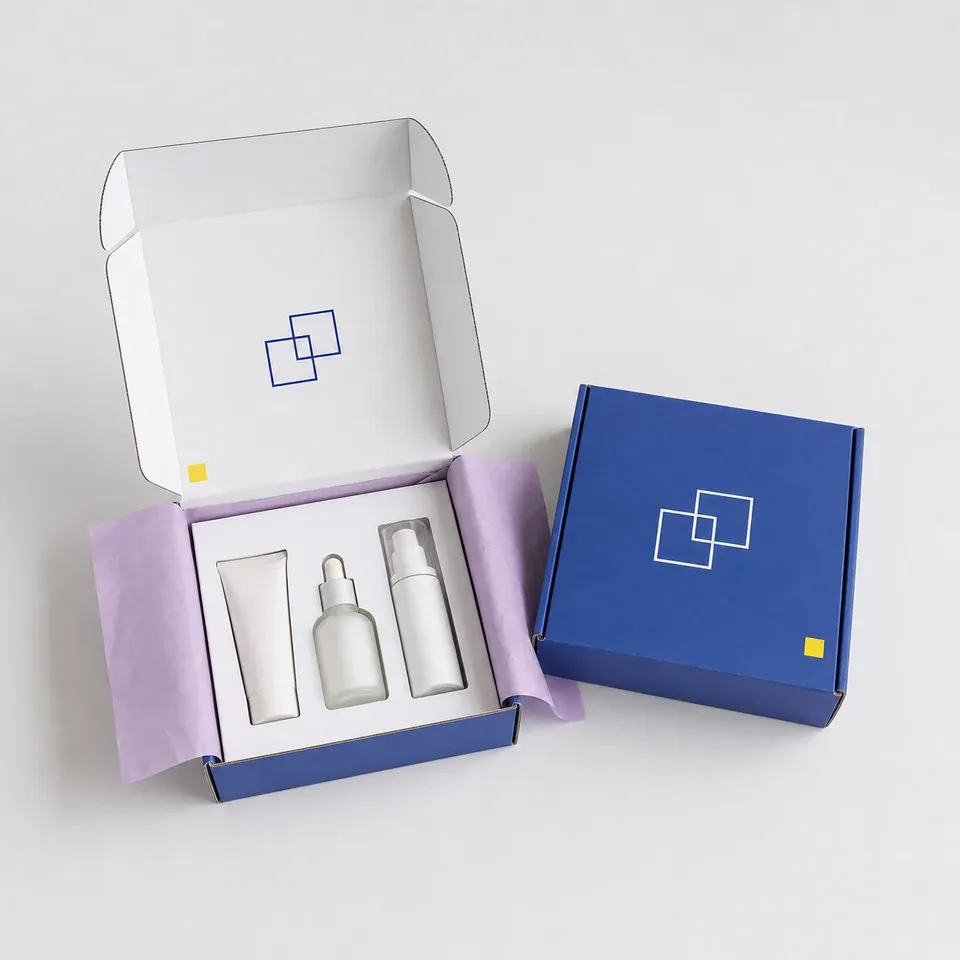
Catalog product
Beauty Subscription Boxes
View product →Start with the bottle
Build a serum box around your actual bottle
Send bottle height, base diameter, and dropper cap width for a quote scoped to your product.
Configuration not started.