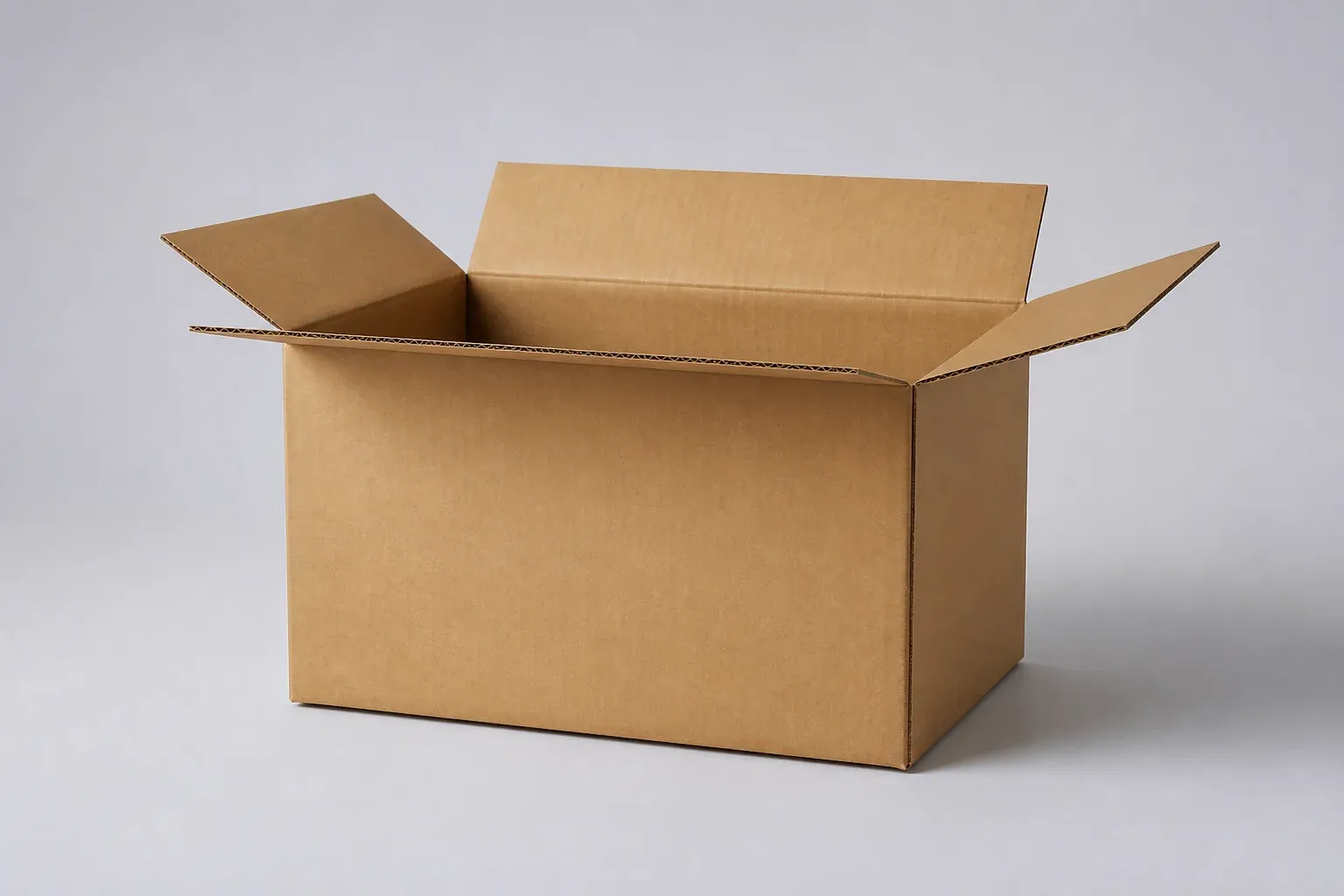

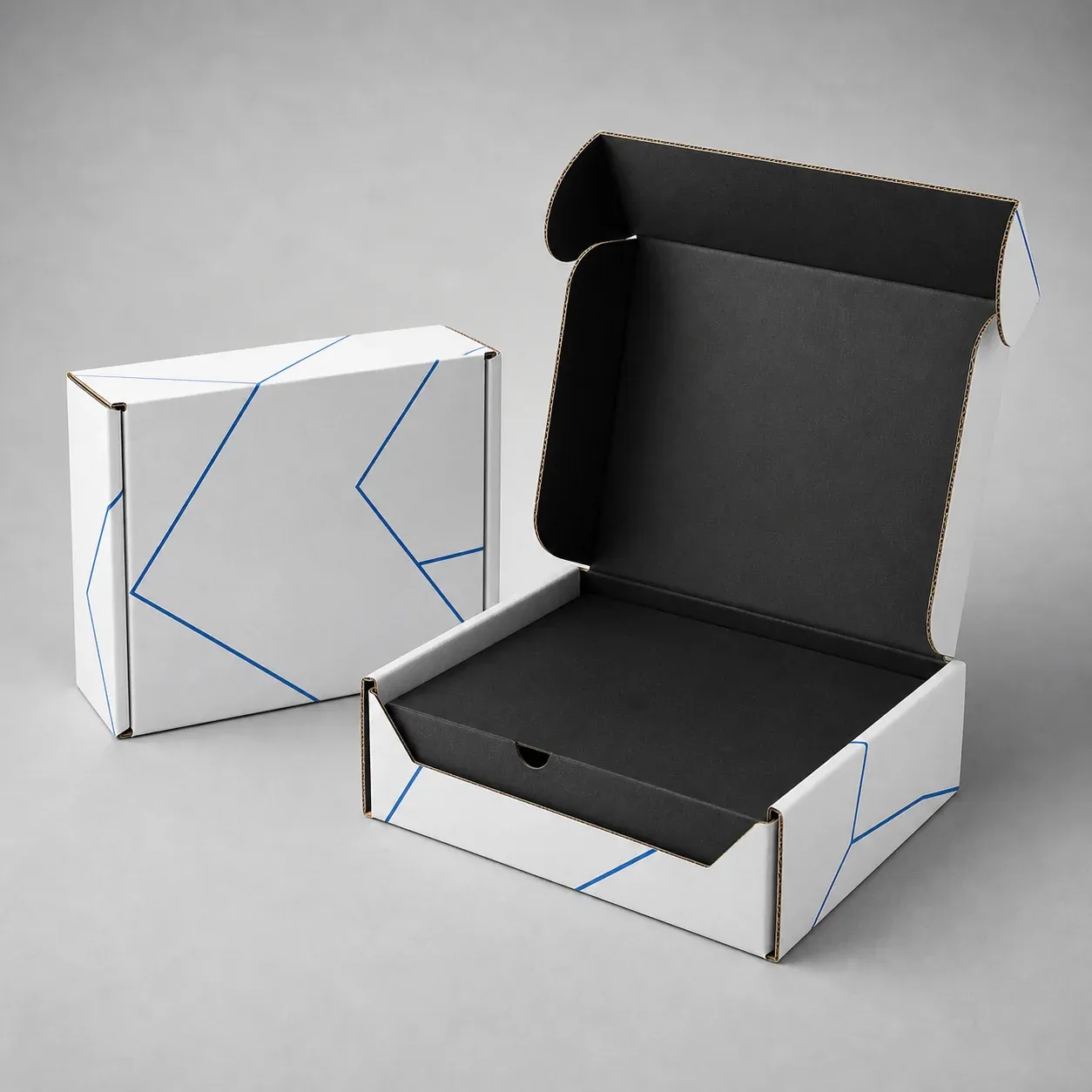
Open kraft corrugated e-commerce shipping carton on a gray studio background
Mailer & Shipping Boxes
E-Commerce Shipping Box
A made-to-order corrugated shipping carton specified around packed dimensions, gross weight, cushioning, closure, label placement, and the demands of parcel fulfillment.
- Format
- Corrugated parcel carton
- MOQ
- From 50 units
Product brief
Built around the way you pack.
Start with the shipment, not an empty-box dimension
An e-commerce shipping box is the protective corrugated carton that carries a packed product through fulfillment and parcel distribution. Its specification begins with the actual packed dimensions, gross weight, product fragility, orientation, and route. Those facts determine how much clearance is useful, whether dividers or cushioning are needed, and which board construction should be reviewed.
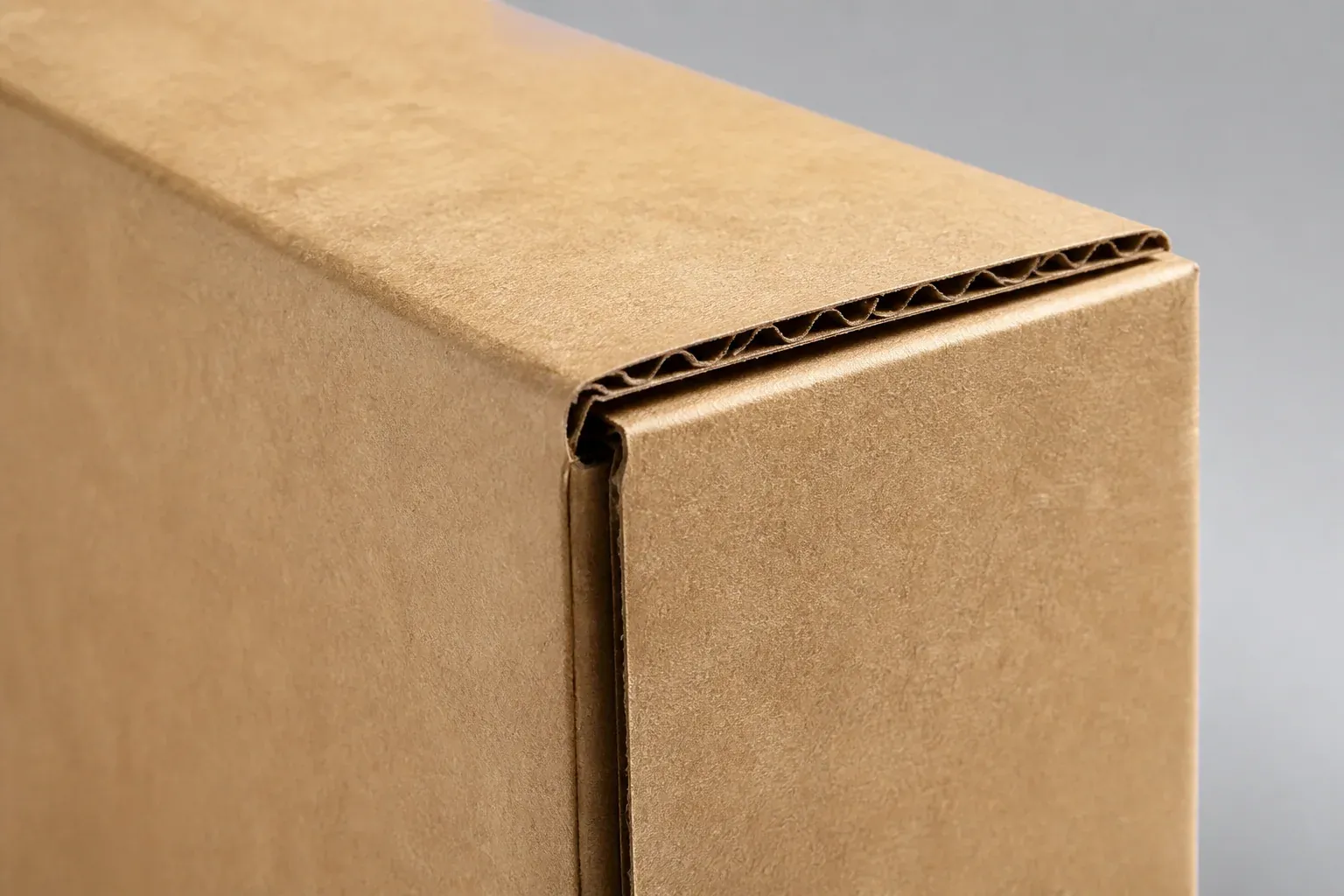
Corrugated board combines linerboard and a fluted medium. Single-wall and multi-wall constructions are available, but no flute, board grade, or weight capacity should be selected from a generic product-page claim. EBP reviews the product, closure, handling environment, and any laboratory or retailer requirements before confirming the construction.
Plan the complete packing method
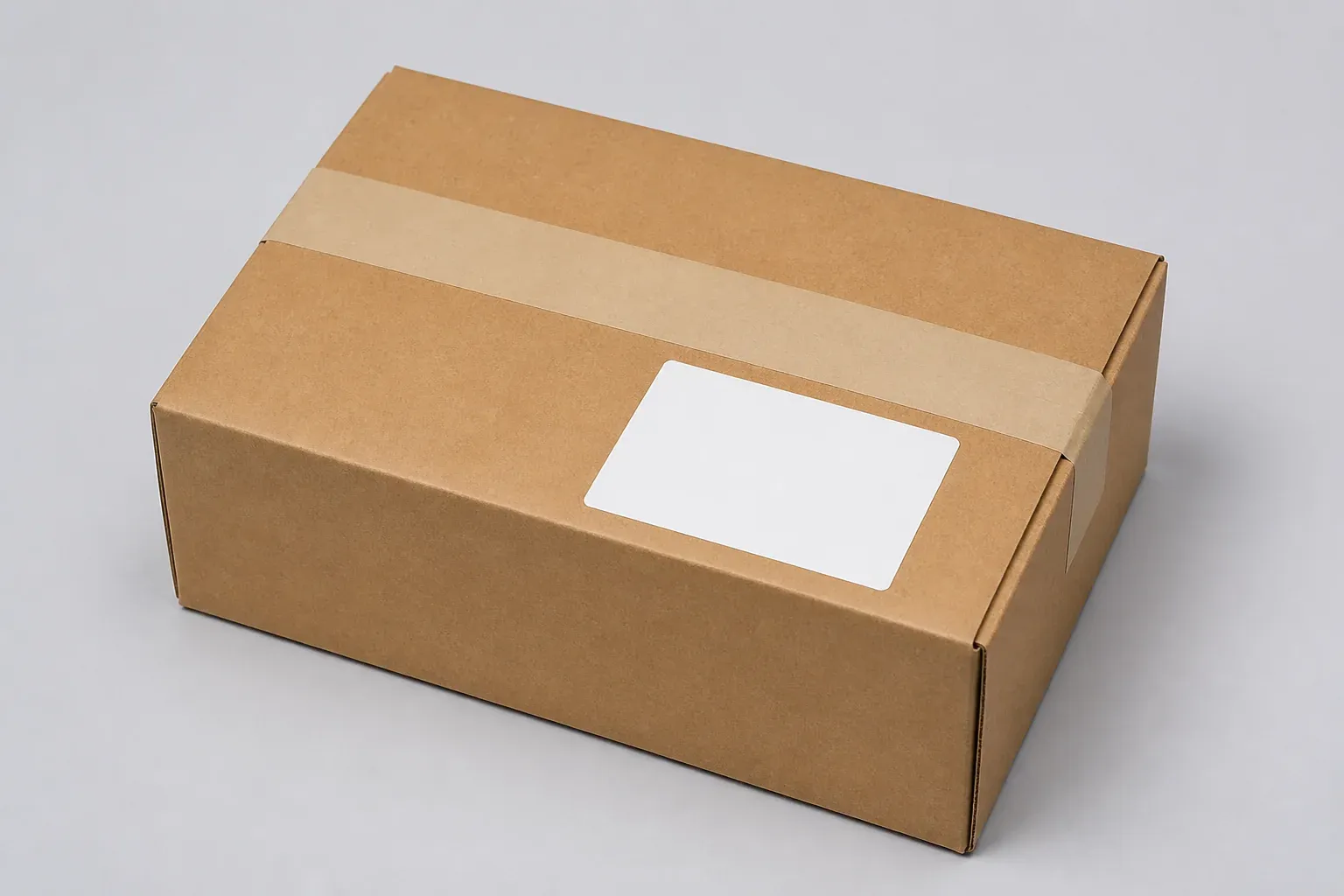
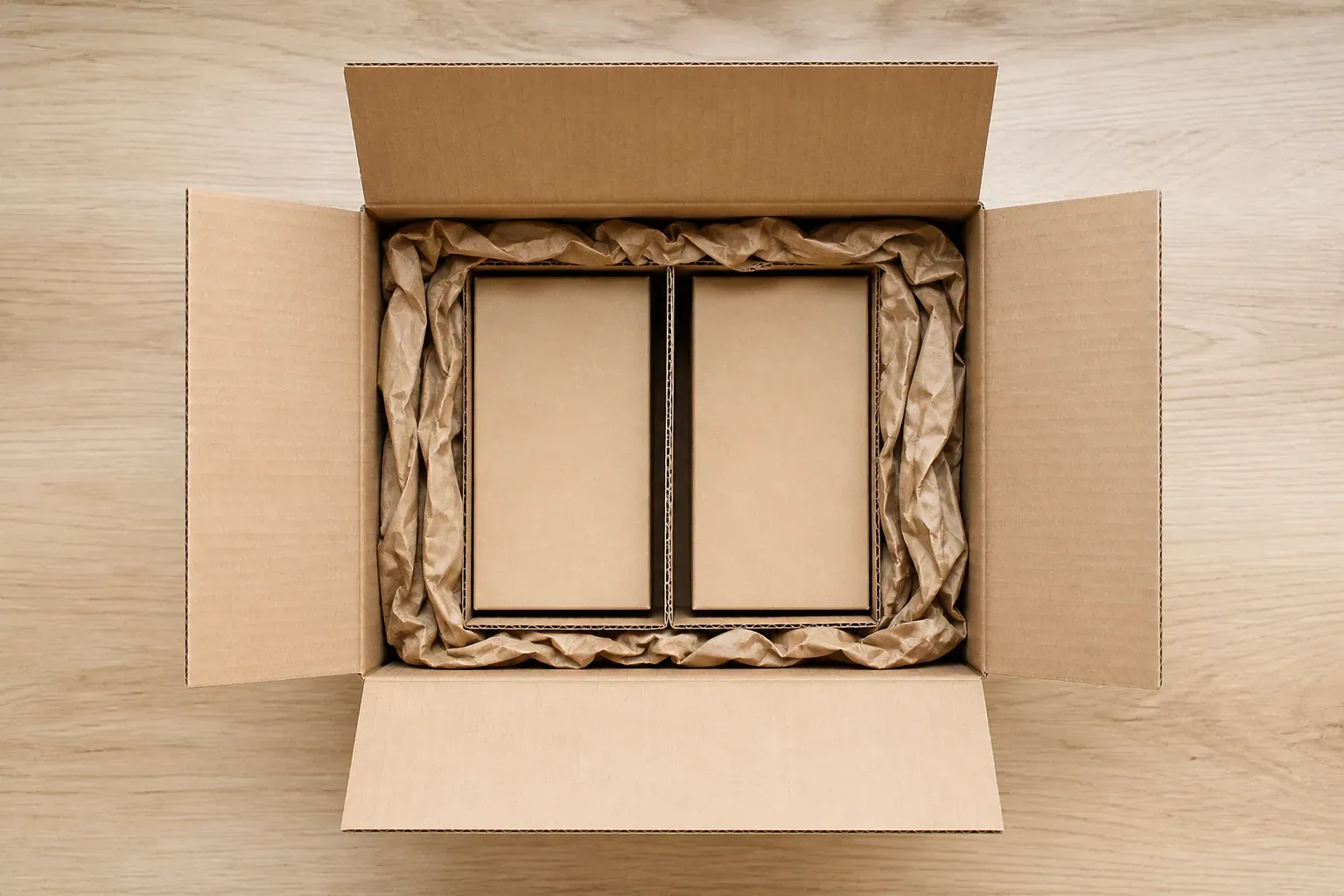
A strong carton cannot compensate for uncontrolled movement inside. Map the packed product, accessories, dividers, cushioning, void fill, closure tape, and shipping-label surface as one system. Keep the label on a flat uninterrupted panel and identify any fragile, liquid, sharp, or temperature-sensitive contents before quotation. If the box is intended to ship without an added overbox, disclose the relevant retailer program and test requirement; the final packed product may need evaluation.
Compare adjacent presentation formats in Custom Mailer Boxes. When the dimensions, gross weight, quantity, destination, packing method, and artwork stage are ready, request a packaging quote.
Proof points
Evaluate the product-and-package system
Artwork proofing checks print placement, but transit performance depends on the actual product, internal packaging, closure, and route. Discuss physical samples and laboratory testing when the risk calls for them.
- Specification basis
- Actual packed product and route
- Proof trigger
- Production follows digital proof approval
Specify the board against the packed load
Liner, flute, wall construction, size, and closure are reviewed against the packed product and route. The final specification should not rely on a generic weight rating.
- Structure
- Custom corrugated parcel cartonFinal wall construction and flute profile are confirmed against packed load and route.
- Closure
- Configured taped or folding closureClosure method follows the approved carton design and packing line.
- Protection
- Dividers, cushioning, or void-fill planningInternal restraint is specified around actual product fragility and movement risk.
- Label panel
- Flat uninterrupted shipping-label zoneArtwork and variable-data placement are reviewed on the dieline.
- Sizing
- Custom packed-product dimensionsProvide inside dimensions, gross weight, orientation, and accessories for fit review.
- Production
- From 7 business daysTiming begins after digital proof approval under the approved commercial rule.
Single-product orders
Right-sized cartons with suitable clearance and restraint for a repeatable SKU.
Multi-item orders
Cartons planned with dividers or cushioning around a known assortment.
Fragile products
Shipping systems that may require individual cushioning, an inner carton, or a defined test plan.
Retailer fulfillment
Packs documented against retailer handling, labeling, and ship-in-product-packaging requirements where applicable.
Keep branding compatible with shipping operations
Printing can carry brand recognition and handling information while preserving closures, label panels, variable-data zones, and legally required marks. Final coverage follows the approved dieline.
- Outer surface
- Kraft or white print direction
- Label zone
- Flat uninterrupted panel
- Proof
- Dieline-based digital approval
Three inputs that shape the carton
Operations details make the shipping-box brief useful.
Packed dimensions and weight
Measure the complete shipment, including internal packaging and accessories.
Protection method
Identify dividers, cushions, void fill, orientation, and any product-specific risks.
Route and handling
Share carrier, destination, fulfillment process, retailer program, and test requirements.
A practical route to quotation
Bring the pack and the fulfillment process into the brief.
- 1.0
Document the shipment
Provide packed dimensions, gross weight, contents, fragility, quantity, and destination.
- 2.0
Map internal protection
Define orientation, dividers, cushioning, void fill, and closure method.
- 3.0
Confirm operational requirements
Identify label placement, retailer programs, test procedures, and artwork scope.
- 4.0
Approve the specification
Review dieline, digital proof, commercial terms, and any sample or test plan before production.
Compare board, print, and pack fit before the run.
The sample kit carries a $19.99 USD shipping charge, credited toward a first order. Contents, availability, credit rules, and delivery terms require Easybox approval.
Shipping charge: $19.99. Credited toward your first order.
Request a Sample KitQuestions before production.
Visible answers and structured data stay identical.
Provide the complete packed length, width, depth, gross weight, orientation, and the dimensions of any divider, inner carton, cushioning, or accessory.
Board grade and wall construction should be reviewed against the packed product, weight, fragility, box geometry, closure, route, and any test requirement rather than selected from a universal claim.
Clearance should support the intended cushioning or divider system without allowing uncontrolled product movement. The right amount depends on the actual product and packing method.
Yes. Artwork can be planned around the approved dieline while preserving closure seams, label panels, variable information, and any required handling marks.
No. Retailer ship-in-product-packaging programs have product eligibility and test requirements. Share the applicable program before the box is specified and tested.
For the approved Mailer commercial rule, production is listed from seven business days after digital proof approval, subject to final scope and commercial confirmation.
Other formats on the bench.
Catalogue products and editor-managed formats available for a production conversation.
Catalog product
Custom Mailer Box
View product →CBD packaging
CBD Cartridge Packaging
Ask about availability →Pack the real shipment
Specify a shipping carton for your fulfillment route
Share the packed product, gross weight, quantities, protection method, destination, artwork, and any carrier or retailer requirements.
Configuration not started.